Wednesday, 16 July 2014

Coast Craving

Even after being away from the coast for a mere five days there's a certain feeling you get when you round a steep hillside and are confronted by the seemingly endless nature of the ocean far below. Older generations have told me stories of seeing the see for the first time at the age of thirteen, or sometimes even later. I can only imagine how overwhelming that might be.
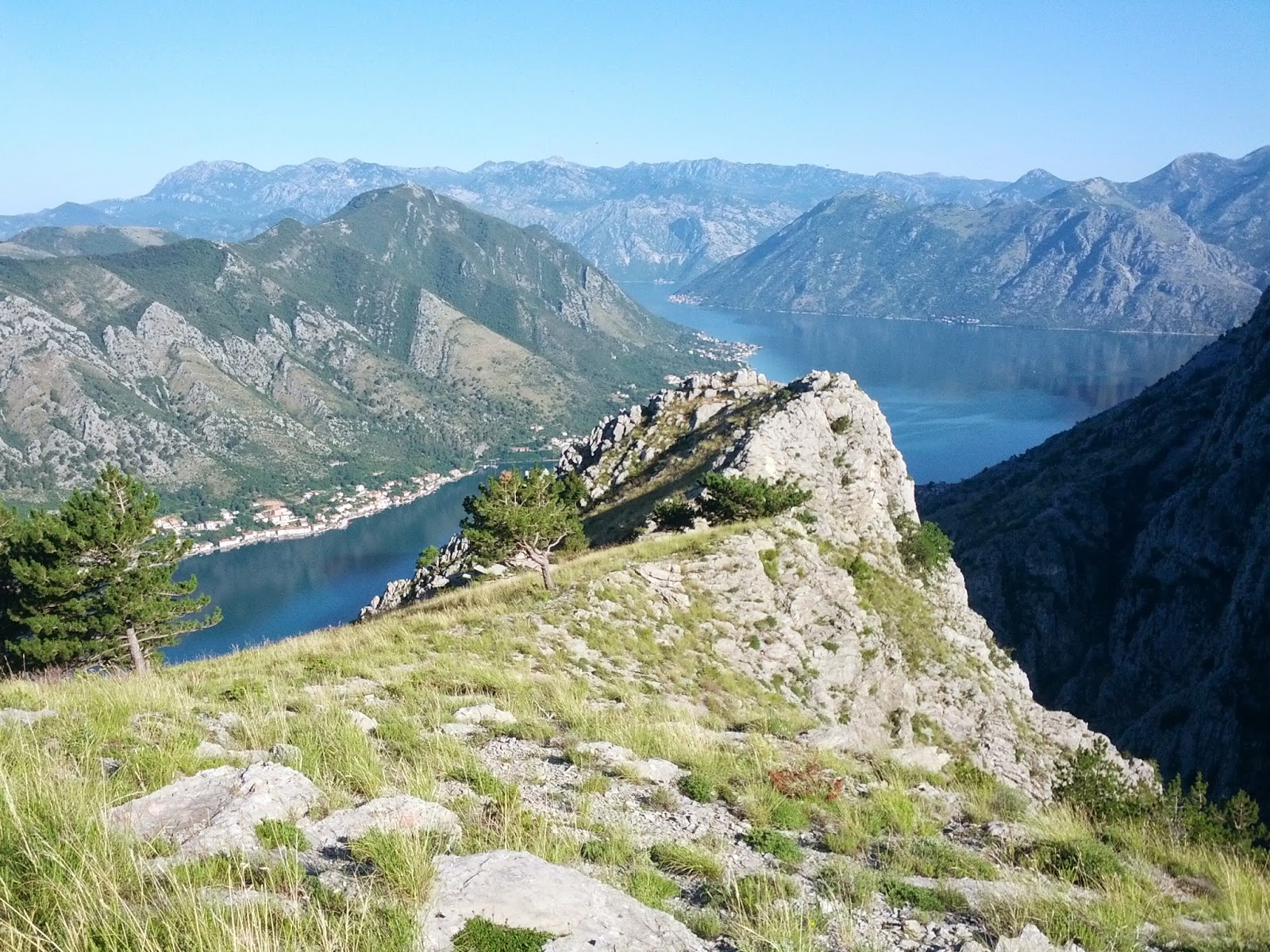
We had just crossed from Bosnia to Montenegro, getting through customs quickly at a rather obscure border check point, now under the watch of clear blue skies. We were bound for the Bay of Kotor, a huge, fjord-like bay in the north of the country. Distances appear so small in Montenegro on a larger map of the region but its only when you get there that you realise how huge the bay actually is. I guess it'd take close to four hours to drive around the whole thing, head to head. As I said. Its huge.
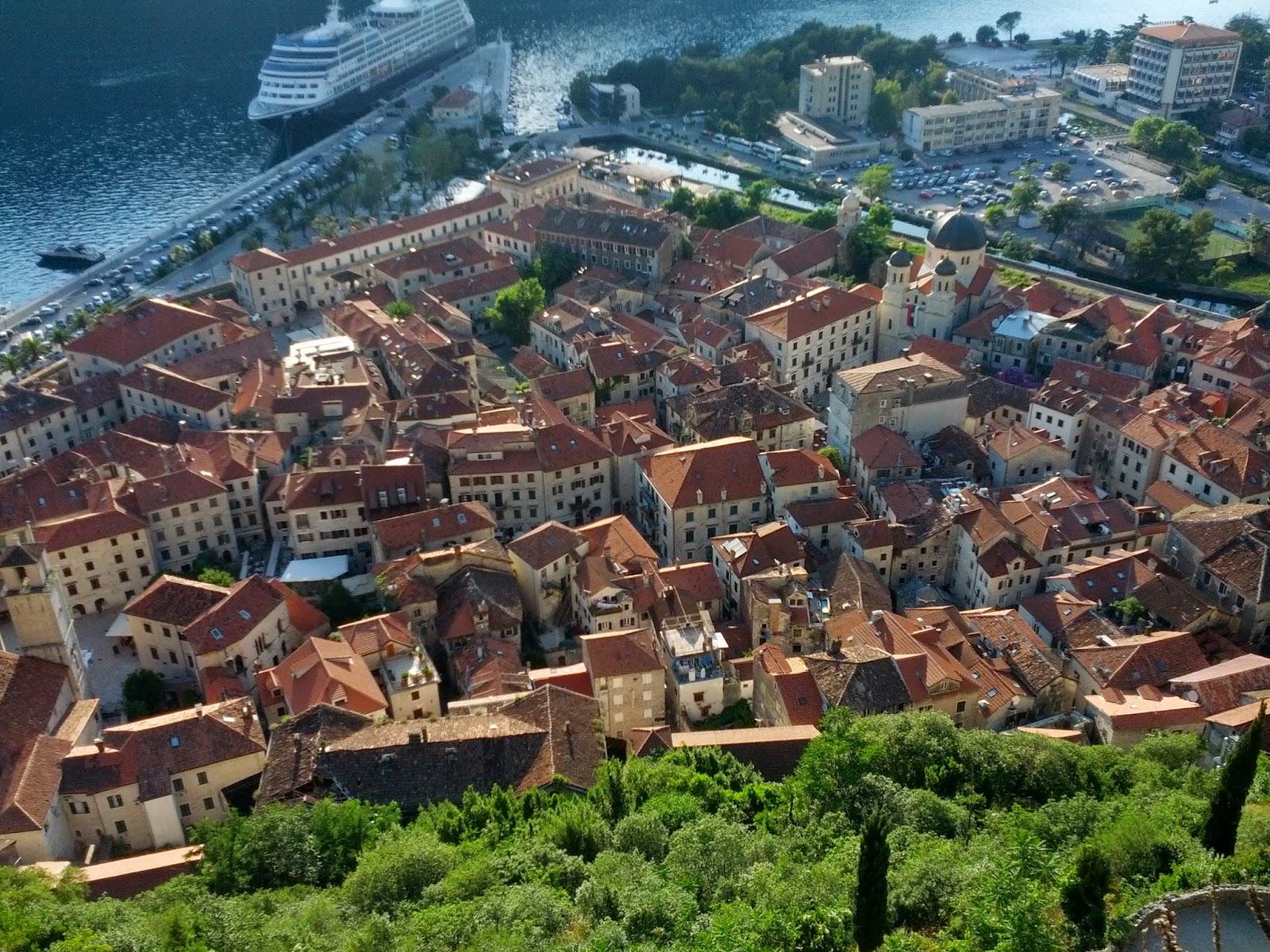
The town of Kotor itself is nestled in the deepest alcove of the bay, hidden from view until you're right inside. We had accommodation booked here for the following night but now that we were here a day early we had time to enjoy what else the bay has to offer. Its by no means a well kept secret as some will tell you, even attracting a big cruise ship every day. It is however probably the best section of coastline I have visited in Europe.
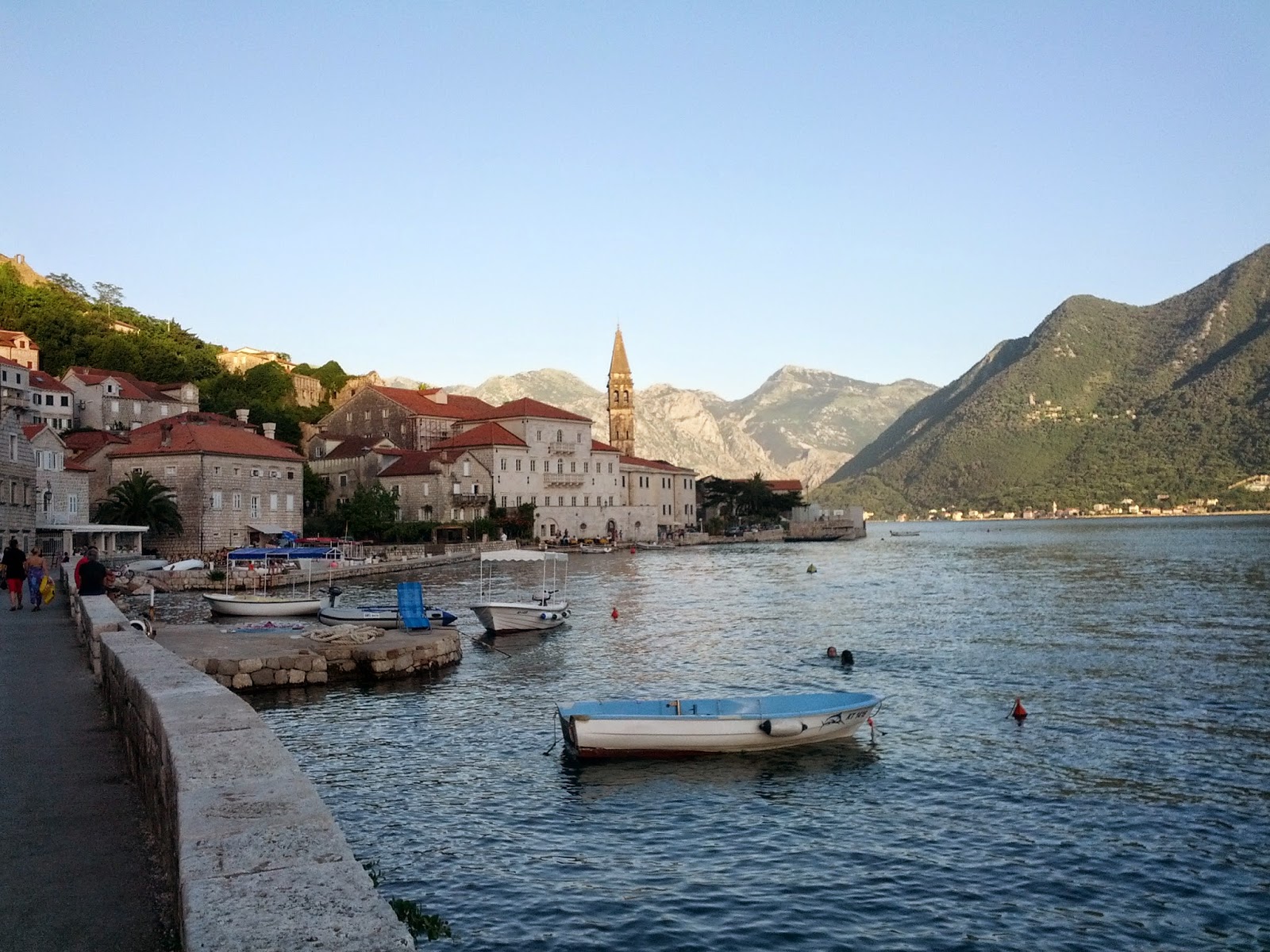
Mountains drop steeply into the fjord-like bay, providing a back drop for sleepy towns and quaint churches. We stopped in Perast. While Dan headed into the town to find “facilities” I had a swim on my own off the developed foreshore near the car. The water is even warmer than Croatia, logical considering its that little bit further south but surprising that its actually noticeable. I floated out in the inky water, taking in the church on an island positioned against a steep wall of mountains behind.

I contently floated for about fifteen minutes before returning to shore, doing a few dives and hurriedly getting changed to look for Dan.
That night we somehow almost made it to Kotor, camping on the outskirts of a nearby town in view of the famous fortress that towers over Kotor itself. The camping was great but yet again we woke up to cattle being herded through our campsite, goats this time. The nice thing about this campsite was not being woken up at seven- odd am by the sun as its blocked by the mountains. Usually the sun dictates sleeping time, getting your tent up to forty or so degrees inside and forcing you from it by 8am at the latest.
After packing up we headed into the city and made the obligatory stop at a Pekara for Burek which went down nicely with a big German ale I bought from the supermarket. After this we headed into the old town to look for our accommodation. Now well experienced in this taking up a sizeable chunk of the day we left enough time to find it and still explore the city. You can't drive in the old city of Kotor so their directions were for walking and were about as illogical as they can get. When it said to pass a certain building on the right it often turned out to be the left. Stressful.
Luckily the old town of Kotor is rather tiny and it took a mere 15mins to find the hostel. We relaxed out of the heat of the day for a while and as the light began to fade we began walking towards the outskirts of the city. With a bit of trial and error we found the entrance to the fortress that towers a couple hundred metres above the city. The lady at the entrance suggested the climb should took 45 mins but it took us pretty much half that, walking steadily up the many hundreds of stairs that lead to the ancient citadel.
We deviated off the well worn path numerous times, passing through abandoned buildings and walking up old fortifications that get few footsteps nowadays. When we reached the top a mere handful of tourists were there waiting to watch the sunset like us.

The light simply faded. There was little colour. Because Kotor sits in a deep fjord-like valley the sunsets aren't very spectacular. The sun simply dips behind the hill and that's it. We descended quickly, planning to return the following day in the cool of the morning.
Our quick descent wasn't really that quick. We ducked through a window and downclimbed 1.5m to find a path leading to an alternate path down the mountain. We found a small, partially ruined church that still had some art in quite good condition which was interesting to check out before beginning our descent proper. At a guess I'd say the descent was three times the distance we ascended, due to numerous hair pins. It was pitch black when we reached the bottom.
Pretty hungry now we headed to the shore outside a once grand hotel to cook dinner. It was still warm at 10 o'clock at night, prompting me to head in for a quick swim. On this night we cooked the pasta sauce with bay leaves as I had found a few trees growing wild on the hill the fortress sits on, it was nice to have a bit of a change from the usual regular sauce with chunky onion.

The next morning we found ourselves up and dressed at 4am. I was not feeling motivated in the slightest. I pushed past it and we made quick time back up the fortress, getting to a reasonable vantage point to see the sunrise induced colours in the sky. We watched the colours change while eating breakfast, watching the lights turn off and the town of Kotor wake up far below.
Now feeling a little more energised we popped through the window we descended from the night before and headed higher into the mountains, passing a single farm house offering goat cheese and smoked ham. Again the path utilised an excessive amount of hair pins to reduce gradient, probably necessary to assist the passage of caravans into the mountains in times past. It wasn't unusual to walk for 200m completely horizontally along the hill before finding another hair pin!
The day quickly got warmer. Real warm. We kept pushing up for around an hour and a half from where we left the fortress, easily gaining the elevation you gain from the town to the fortress again. We stopped for a long break before turning around on top of a knoll that could have been around 800m high, a substantial height when you've climbed this whole way from sea level! This knoll was a mere point on a ridge of the impressive mountains rising beyond the town. Once you get up there they're much higher than the look from below.
\
We slowly made our way back down, now in the heat of the day, trying our best not to completely kill our knees on the long descent. We got back to the hostel at around 9:30 am, hurriedly packing up our stuff and checking out. We had a long journey ahead of us if we were to keep on track and visit the places I was so intent on while in the Balkans.

Friday, 11 July 2014

Bosnia; A Path less Travelled

After leaving the bobsled sled track the following morning we headed towards the Montenegro border, venturing deep in Republika Srpska, an ethnically Serbian area of the country. Serbs make up some 37% of Bosnia's population, not too far behind the amount of Bosniak's, the dominant ethic group from which the country derives its name. In this region certain things began to change. I saw no Bosnian and Hercegovinian flags hanging in the streets. Instead all the flags were Serbian, except they were missing the crown-topped eagle crest that normally adorns the centre. Secondly, the Cyrillic alphabet was used almost exclusively for everything but major road signs. This is a political and cultural statement making a clear affiliation to Cyrillic-dominant Serbia.
A river by the road passed through a surprisingly natural-looking tunnel
The weather was ominous, threatening to storm up any minute. Not a good sign considering we wanted to visit Trnovacko Jezero, a picturesque lake on the Montenegro-Bosnia border. We were getting deeper and deeper into the mountains and the road occasionally took lines cut into the side of canyons. Early on in the mountains proper the police flagged us down with one of those small stop signs they carry everywhere. As per usual they spoke little English and we expected the worse; this was a shake down. Basically a once over to try and find weaknesses to leverage bribes. 
After looking over our papers they finally spoke in broken English. “Australia- left side. Bosnia- right side!” Were we going to have to pay a bribe for the privilege of driving on the opposite side of the road? They seemed to deliberate a little but in the end it turned out they were just trying to be sociable. We drove on, the sky continually becoming darker and the cloud base dropping.

At one point we saw two huge concrete sculptures sitting on top of a hill on the right side of the road, two curved staircases leading up to them. I couldn't see why there was such a large impressive communist monument in such an obscure place. The time, collection of “donations” and “volunteers” required would have been substantial. It was now raining but I was determined to check it out from up close, running up the staircase. From the side that faces away from the road it appears like two huge fists, pointing towards the sky. Impressive stuff.
When we reached the turn off to the lake it was pouring with rain. Still, we thought we'd give it a go, lifting yet another boom gate that we probably weren't supposed to. The road was ridiculously washed out, aggravated by the ensuing torrential rain. There was no chance in hell we were reaching the lake today, particularly after loosing a windscreen wiper meaning we couldn't see out of the front properly. Defeated we turned around with great difficulty and headed back. Only to find someone in the checkpoint by the gate.

This someone came out and interrogated us, taking down our number plate and passport details. We have no idea why. Maybe because its a border area and we're not meant to drive there. Or maybe because we didn't have a national park ticket, something he claimed we should have but there was no signage to tell us this. I still don't have any idea. 

The weather was miserable and didn't look like it wanted to clear up any time soon. Dark clouds hugged the mountains and torrents of water gushed down the hillsides. Good weather in the mountains seemed elusive yet again. So we made the decision to simply head for the cost a day early. 
Improving weather closer to the coast and one of many Serbian flags


The Balkans conflicts are still very much being felt today

The Jerusalem of the West

Cars become a resounding rumble as they drive on the cobblestone streets, barely intrusive in the tight alleyways filled with the wafting aroma of shisha smoke in the hot afternoon and the colours of Ottoman style silks and fabrics hanging from shop windows. It doesn't really feel like Europe. The streets are like something from much further east, overhung by wooden sitting rooms with lattice windows and bordered by the roofed entrances to courtyards. If was to see a picture and hazard a guess prior to coming to Bosnia I would probably think it was somewhere in northern Africa or Turkey.
Burek in Bosnia comes in Spinach and Cheese and Spiced Potato varieties that you'll find nowhere else
Sarajevo is a city divided. Minarets pierce the ubiquitous red roofs that cover the cities hilly landscape but grand churches remain hidden in the depths of the city centre, only noticeable when you're in the thick of it. Sarajevo has a very particular feel. When I picture Sarajevo I picture the red roofs, the extensive cemeteries of white head stones and the mosques which make it a city like no other. When viewed from above the colours are unique, working together to create some kind of fusion on juxtaposition. It's sometimes known as the Jerusalem of the west as the city houses a divided population of Jews, Christians and Muslims which have all lived in relative harmony until the more recent conflicts in the Balkans. 
We had driven here from Mostar, arriving at around three-o'clock. Driving in Bosnia is overrated. I had read online about how there's only 40km of two lane road in the whole country, limited to the cities and how all the roads are terrible and require patience. This simply isn't true. Most of the way the road was better than the midlands and had similar, short overtaking lanes every so often. People from the EU seem to be so soft in regards to roads, they seem to think that any road that doesn't have at least two lanes in each direction and isn't safe to go 130 on is a bad road. As a Tasmania I simply don't feel the same way.

We got some well priced accommodation right in the city centre, a great base to explore the city's charm as it is situated right outside the Ottoman quarter. That afternoon we had a bit of a walk around and sat down for a hookah in a shisha bar. In typical style you lounge on couches, covered in middle eastern fabrics. I'll freely admit, its a very relaxing experience. The smoke is aromatic and non-intrusive and the process itself takes a long time and is by nature very social. Its also demotivating and bad for your health. I don't know any statistics but if someone was to tell me it was equal to smoking half a pack of cigarettes I wouldn't be surprised. 

It took us about one and a half hours to share a ceramic cone piece filled with mint flavoured tobacco. It was somewhat of a hypnotic atmosphere, lying on couches, smoke clouds hanging in the air, deep in a narrow Sarajevo alleyway. I noticeably found it harder to draw in towards the end, wondering if the health issues were already starting. No. They would be evident when I would later walk up to the accommodation in dying light, breathing noticeably more heavily than usual. 

Oh well, it was a cool experience but not one I'd want to make a regular occurrence. It doesn't take long to purge the system.

That night I stayed up real late, watching a movie and talking to a Spaniard for ages on Shared Talk to try and improve my Spanish. I don't know how much I retained considering it was 12:30 when I first called someone. We woke late the next morning and explored the city for a few hours, leaving in the late afternoon.

I had found out about an abandoned Olympic bobsled track high above the city online so we were on our way to check that out and find camping. First we headed up above the city to get a view over the white tombstones of an Islamic cemetery to the city below. The roads were beyond interesting. In Sarajevo's residential suburbs there were roads we couldn't get up in our car despite being fully paved, they were that steep. We looked at cars in driveways above and simply couldn't comprehend how its done. An old woman made hand gestures indicating momentum but momentum was no match for the sheer gradient. 

When we finally left the sun was only two hours off setting. We were quickly well off the tourist track, the road winding its way towards a 1600m+ peak that backs the city on one side. The bobsled track sits on the hill side of a hillock below the peak.

We knew we were in the right place when we saw a small section of the track on the side of the road. By a small section I mean maybe 3m of track standing free like some kind of demo for what awaits below. We headed down a narrow road, passing under the track at one point. Quickly after the 1984 Olympics this place became overgrown and fell into disrepair. Its hard to see why they invested so much and then let it go. It's obvious that the siege of Sarajevo even reached here, evident in the shell holes in the track itself and crumbling buildings, far outside the scope of thirty years exposure to the elements. 

The track meanders through thick forest, an almost eerie sight and a reminder of how easily things can collapse. A mere thirty years ago this was a world class complex with a network of access roads, toilet blocks and restaurants. Now its a mere shadow of its former glory, lurking in the forest waiting for only those that are curious enough to venture into Sarajevo's fringes looking for it. 

Friday, 4 July 2014

The Darker Side of Mostar

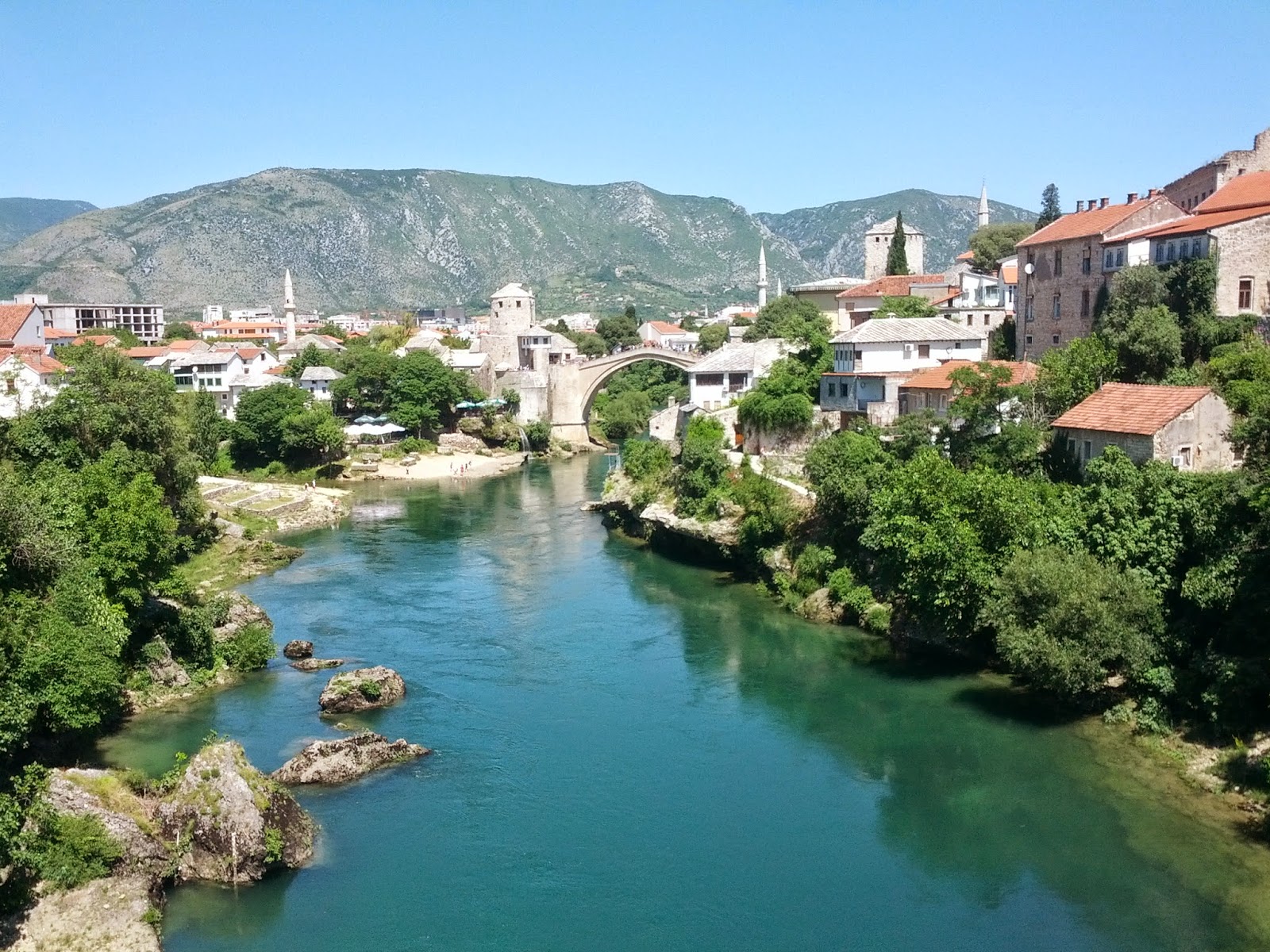
The sound of the gurgling river seems to seep through the cobble stones of the narrow alleyways, lined with shops selling Ottoman silks and rugs. Others sell objects slightly more ghastly. Knives. Helmets. Any type of war time memorabilia you can think of, something that is in abundant supply in parts of the Balkans. Minarets penetrate the skyline of the old city which hugs the banks of the river and a huge church tower dominates the western side as sepia roofs give way to modern constructions of glass and concrete. 
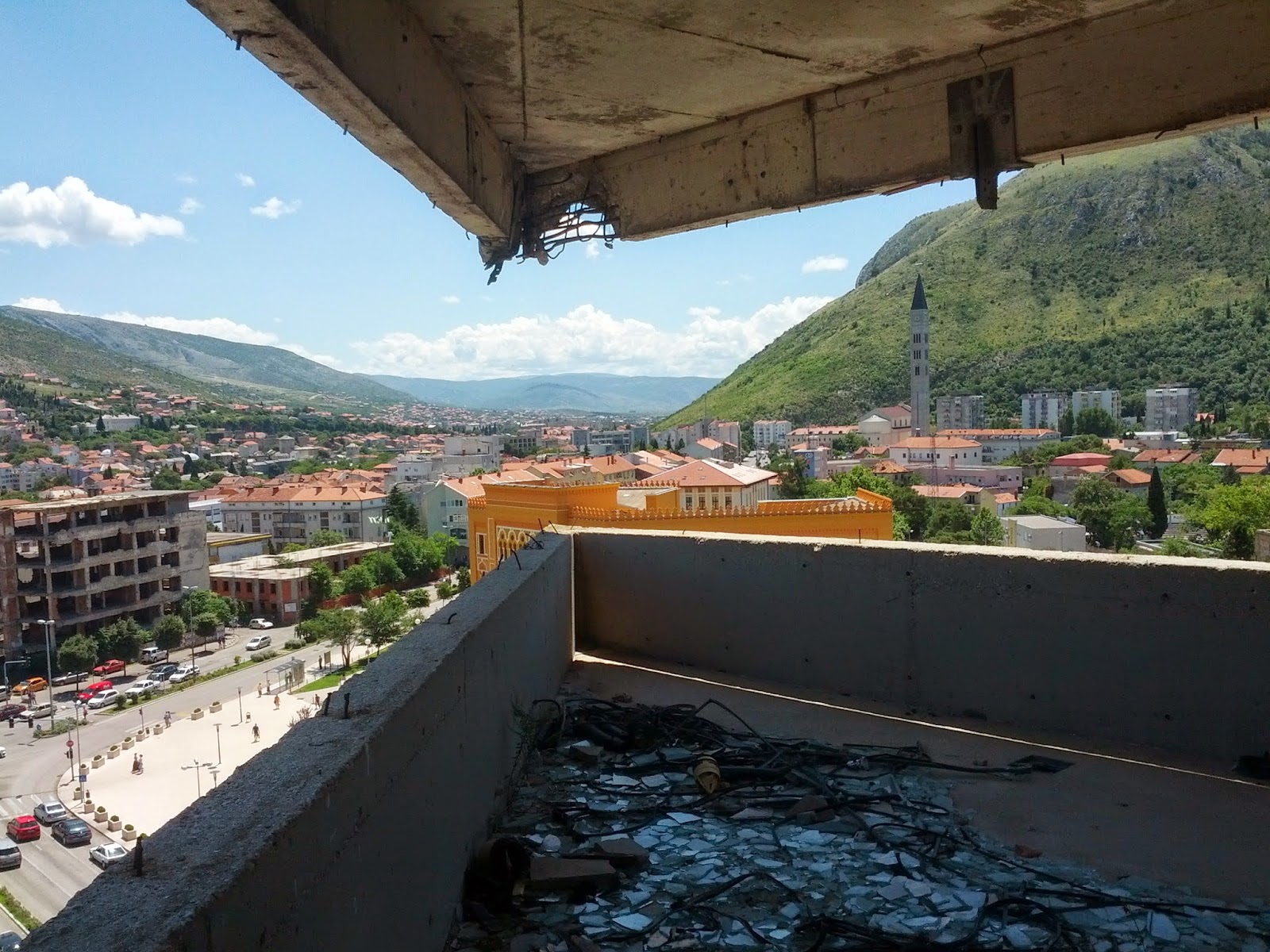
High above this a massive cross stands on a hilltop. Mostar is a city of two distinct cultures. Herzegovinans are largely Muslims while the cities Croatian and Serbian residents are Christian. It would be nice to say the two live in complete harmony but they simply don't. They intermingle in their daily lives to an extent but it's clear what the predominant religion is on each side of the river as you move away from the Mosque dominant old town.
The city lacks any big checklist attractions but everywhere you look the city responds with intriguing tight streets and ornate buildings. An old triangular bridge spans an airy gorge like gap over the river the city surrounds. The city itself sits in a bowl, surrounded by not overly high but quite steep mountains. You can spend ages in the old town, or Stari Grad in the local language, simply taking the place in. But no longer being a well kept secret with an out of the way location it attracts the tourists it deserves. American, British and German accents seep from everywhere and the streets are crowded with outsiders, interspersed with the odd local commuting to and from a mosque. The latter is a small minority when juxtaposed against tourist volume. This quickly makes the old town a tiring place to visit.
* * *

War time sentiments
I step up on a block, gripping the top of the concrete barricade and hauling myself into the dark, dingy and graffiti covered space within. My feet crunch as I hit the floor. Rubbish. Lots of rubbish. Everything from plastics, to glass, to household items to the odd bullet casing. I advance forward, cringing as I notice several syringes in close proximity on the ground. The place is obviously frequented by junkies. Good thing we came in the morning. The ground floor bares little resemblance to a inhabited space, only a partitioned room with tile lined walls eluding to its prior function. 

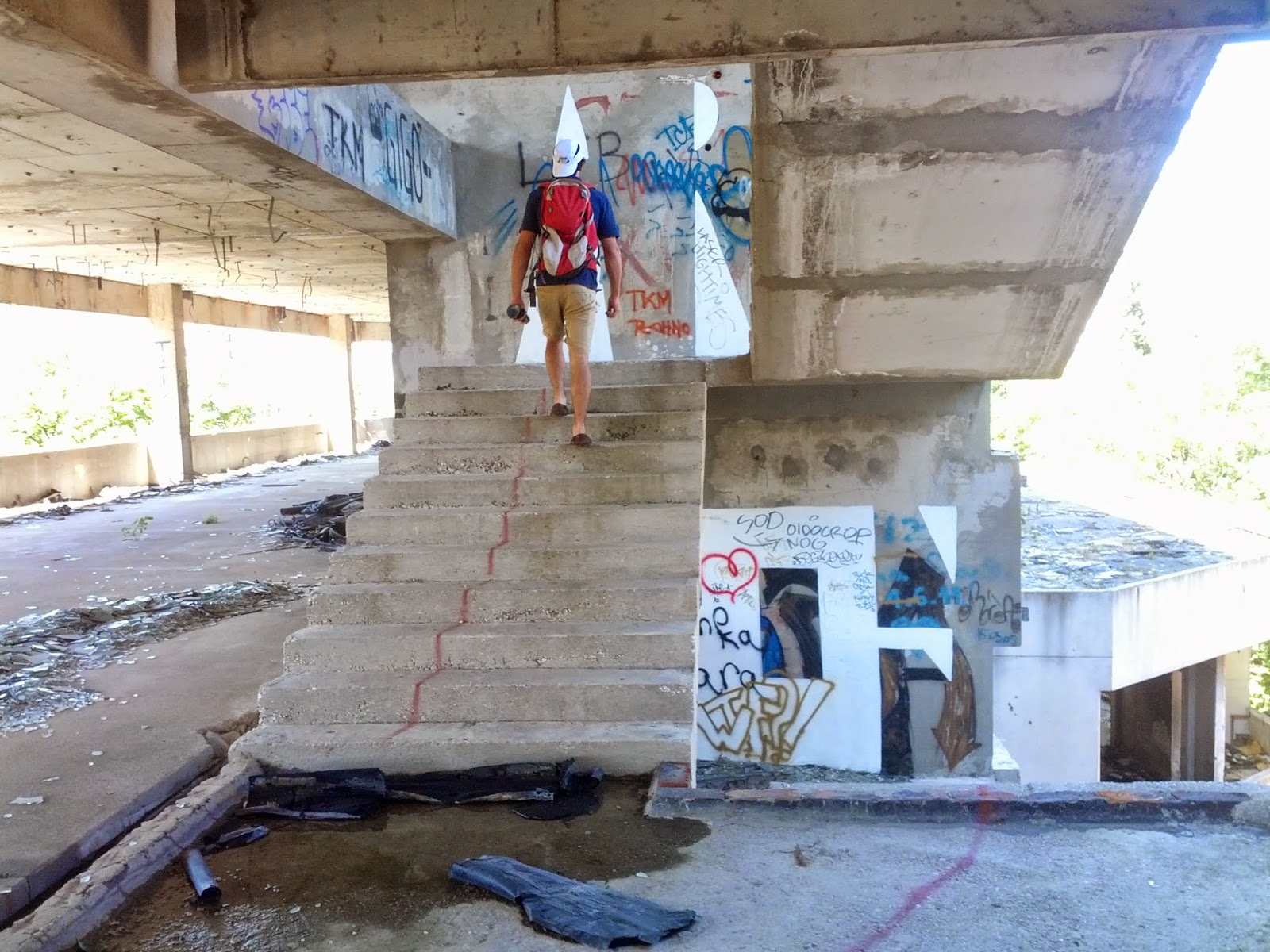
We make our way through a creepy, dark labyrinth of small rooms before realising the stairs weren't in this part of the building. We were glad to escape the dark enclosed space and quickly found the stairs we had spotted from the road. And then I looked up. The stairs double back eighteen times, ascending nine stories, precariously perched on the edge of the building with no kind of protection. This becomes quite an intimidating prospect for those that know these stairs survived and eighteen month siege. 
 
Luckily the stairs looked and felt extremely structurally sound and the only thing to contend with was the drop down into the alley way below as you advanced up the stories. On the third floor I saw the first distinctive triangular point, the thing that had initially drawn me to the building which I had seen in a rather obscure online article. Few people come here. Junkies and the odd curious foreigner that likes to get into the very heart of a place, that's about it. 
I walked towards the unsupported protrusion of grey concrete, noticing the sheer amount of frosted glass lining the sides of the room and the cabling, now well and truly redundant, hanging uselessly from the ceiling. The shelling was so relentless that literally no glass still remains in the window frames of the building. Mostar's past is very much in your face here. If you don't notice the numerous bullet casings lining the ground where snipers squatted, cleansing certain ethnicities of the civilian population, you will definitely notice the huge shell holes in the walls.

I stand in the very point, protected from a sizable drop by a thigh high railing of concrete. Looking out on the city below from this height I notice more and more how much of the city has simply been put in the “lack of funding” or “too hard” basket and left standing in the state the siege left it. The locals that lived through this period and remain in the city have daily reminders of their cities terrifying past. Its hard to imagine living through that and remaining in the city that delivered so much uncertainty, heartbreak and sheer terror. 
The building almost talks, raw emotion seeping from it, from the graffiti that lines the walls to the debris that covers the ground. Some beg for harmony. Others are have no relation to the past, artists have just discovered that this building offers plenty of open walls. I make my way up, eventually arriving on the roof. The city seems far below now and possibly the best close up view of the city lies below me but I cannot help but wonder what it would have looked like standing here a mere twenty years before. 


On the way down we notice a sub-roof. We hadn't seen any way on to it but searched around, finding a fire escape which does not line up to the regular stairs. This gets us onto the sub roof at the level of about story three with a short descent and small jump. This roof, probably once covered in tables for coffee and lunch breaks is now covered in a consistent ten centimetre plus layer of eroded broken glass. As the windows were all gradually shot out this caught the bulk of the glass. The glass doesn't crunch, its too weathered for that. It shifts, clinking a little. From the end of the roof you can look back up the line of points, making you notice just how high up you were at the top. I picked up a couple of casings and headed back to the exit point. 
We easily spent an hour and a half in here, wandering around. As I descended I noticed the light had changed, illuminating the ground floor considerably more. We looked around one last time and climbed over a different wall, avoiding the parts of the building that are favourites for junkies.

* * *

One afternoon Dan wanted to paddle through the city so I dropped him off and headed for the hills, wanting to find a way up to the cross that stands sentinel over the city. The back streets aren't exactly easy to navigate. I went down what may or may not have been a one way street for 1.5km, tucking in the mirrors as per usual. On another street I had to avoid a pot hole that was literally three quarters of a metre deep. Eventually I got on a narrow, winding road where I still advantaged from having the mirrors tucked which took me up into the mountains.
Soon valleys beyond Mostar began to open up and I reached the saddle below the hill I wanted to climb. The road needed to reach the top is tiny with a hair pin entry from the direction I was coming so I missed it, forcing a three point turn in a less than safe situation. I went close to five kilometres up the road hunting but found nothing reasonable. 

As I made my way up the mountain I began to see sculpted stones depicting the stations of the cross on the outside of hair pins. There was a fountain part way up so I stopped here for a drink and washed my face, warding off some of the heat of the evening. As I rounded a knoll the cross suddenly came into view. It really is a dominating construction, much bigger than I would have expected and the city seemed very far below. I sat for fifteen minutes or so, more than content doing nothing but taking in the panorama doused in evening light.